Missed Carbon Rebates? File by October 30
The quarterly carbon rebate payments stopped in April 2025 — but if you skipped filing a tax return between 2021 and 2024, money may still be sitting with your name on it. A proposed October 30 cutoff would close the door for good, and the safe move costs you nothing: get those returns filed before it.
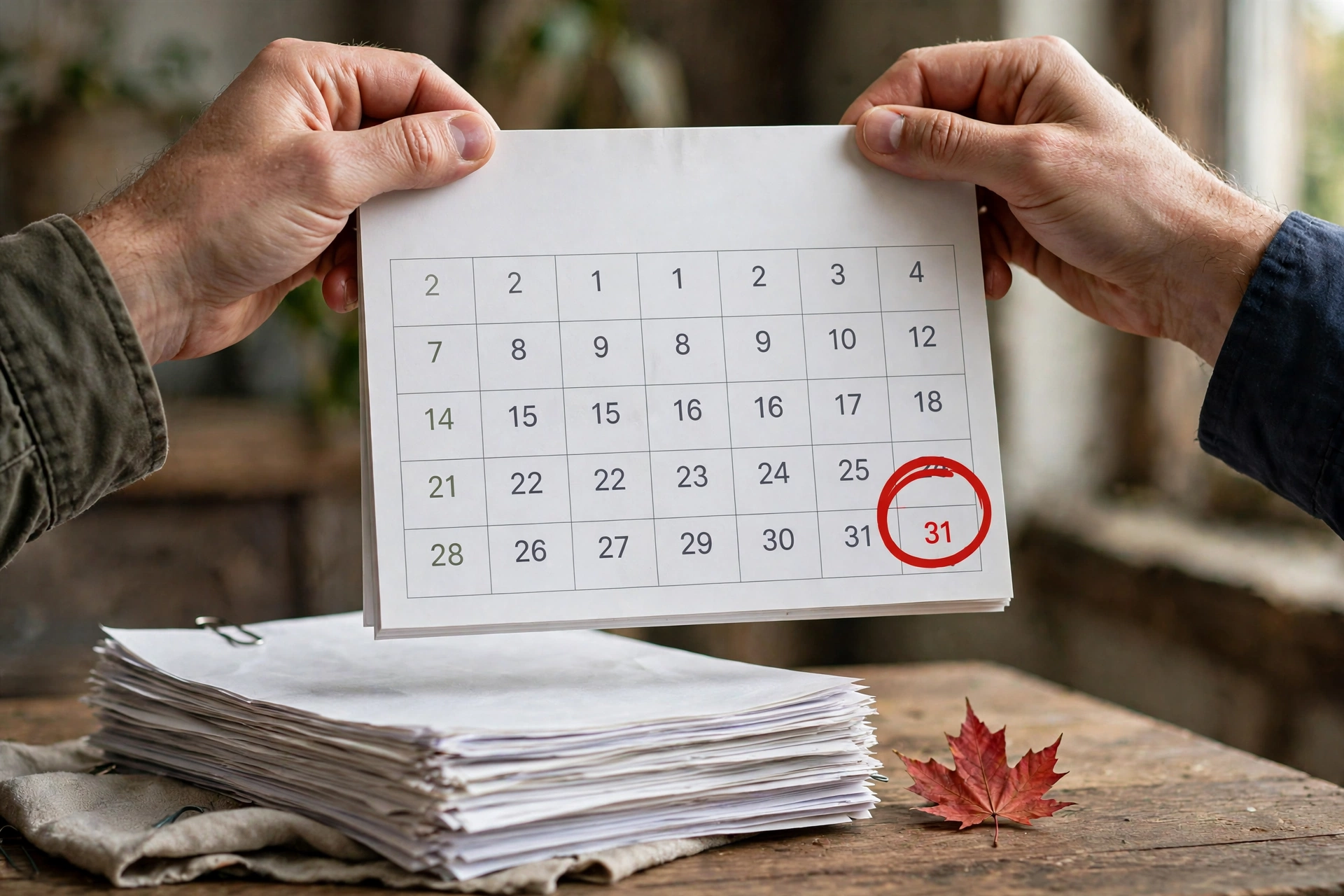
The Canada Carbon Rebate is over — the federal fuel charge was scrapped in 2025 and the last quarterly payment went out that April. But the CRA confirms that eligible people who never filed tax returns for 2021–2024 can still receive the payments they missed, once those returns are submitted and assessed.
Now Ottawa wants to shut that window. Bill C-31 would set October 30, 2026, as the hard stop: no rebate payments for returns, adjustment requests, or reassessments filed after that date. With nine days left, the only safe move costs you nothing: get those returns filed before it.
The headline facts.
What: Proposed cutoff for catch-up Canada Carbon Rebate payments
When: October 30, 2026 — for returns filed after that date
Applies to: Unfiled 2021–2024 returns, adjustment requests, and reassessments
Status: Proposed in Bill C-31 — not law yet, but a return filed before Oct 30 qualifies either way
At stake: Up to $1,800 a year for some households, across four tax years
What the October 30 Deadline Really Is
The Canada Carbon Rebate (CCR) — previously called the Climate Action Incentive Payment — ran from 2019 to April 2025. It was the federal government’s way of offsetting the cost of carbon pricing for households, paid quarterly and tax-free. When Ottawa scrapped the federal fuel charge, the rebate ended with it.
But the payments were tied to tax returns. If you did not file for a given year, you did not get that year’s rebate — and the CRA will still pay it once the return is in. That is the loophole Bill C-31 would close. Proposed in Budget 2025, the bill would amend the Income Tax Act so that no CCR payments are made for returns, adjustment requests, or determinations filed after October 30, 2026.

This is not law yet. According to Parliament’s LEGISinfo tracker, Bill C-31 is currently before the House of Commons Standing Committee on Finance. It could pass as written, be amended, or stall entirely. But waiting carries all the risk: if the bill passes, returns filed after October 30 lose the rebate for good. If it does not, an early filer loses nothing.
How Much Money Could Be on the Table
The rebate was not income-tested — the amount depended on province and family makeup. CRA data for the 2023 base year:
Households outside a census metropolitan area also qualified for a rural supplement worth 20% of the base amount — another line worth checking, because the proposed cutoff covers adjustment requests too, not just unfiled returns. If you filed but missed the rural supplement checkbox, a correction request after October 30 may also fall through the cracks.
Note that the rebate only ran in eight provinces — Alberta, Saskatchewan, Manitoba, Ontario, New Brunswick, Nova Scotia, Prince Edward Island, and Newfoundland and Labrador. Residents of British Columbia, Quebec, and the territories were not eligible (B.C. operated its own income-tested climate action tax credit).
Who Most Likely Left Money Behind
The Canadians most likely to be owed carbon rebate money are often the least likely to have filed. If any of these sound familiar, check:
1 Non-filers with little or no income. You still had to file a return for each year to get the rebate. The CRA’s own advice: file a tax return even if you had no income to report.
2 Young adults. You generally had to be 19 or older, so anyone who turned 19 during those years should check their eligibility.
3 Couples where neither partner filed. Only one partner receives the family payment — usually whoever’s return is assessed first. Both partners need to file.
4 Newcomers to Canada. New residents apply using a CRA form rather than simply filing a return.
5 Rural households. If you filed but missed the rural supplement checkbox, the proposed cutoff covers adjustment requests too.
6 Seniors and retirees. Older Canadians with little taxable income are less likely to file — and miss out on rebates as a result.

What to Do Before October 30
With roughly nine days before the potential cutoff, here is the order of operations:
Step 1: Sign in to CRA My Account and check which years from 2021 to 2024 are unfiled or unassessed.
Step 2: Gather your slips for each missing year, starting with the oldest — the oldest year has the most at stake.
Step 3: File each return electronically. The CRA’s NETFILE service accepts initial returns for tax years 2018 to 2025 through certified tax software.
Step 4: Make sure both partners in a couple file, even if only one of you has income.
Step 5: If you live outside a major city, confirm the rural supplement box is ticked.
Step 6: If your income is modest and your return is simple, look for a free clinic through the CRA’s Community Volunteer Income Tax Program.

Worried filing late will trigger a penalty?
Take comfort: the CRA charges a late-filing penalty only when you have a balance owing — 5% of what you owe, plus 1% for each full month late, up to 12 months. If you are owed a refund or benefits, filing late carries no penalty at all.
Frequently Asked Questions
Is the October 30 carbon rebate deadline already law?
No. It is a proposal in Bill C-31, which is currently before the House of Commons Standing Committee on Finance. But a tax return filed before October 30, 2026, will qualify for the rebate whether or not the bill passes — so filing early is the safe move.
Which provinces did the Canada Carbon Rebate cover?
Eight: Alberta, Saskatchewan, Manitoba, Ontario, New Brunswick, Nova Scotia, Prince Edward Island, and Newfoundland and Labrador. Residents of British Columbia, Quebec, and the territories were not eligible.
Which tax years do I need to file to claim missed rebates?
The years 2021, 2022, 2023, and 2024. If any of those returns were never filed or never assessed, you may still be owed payments. The proposed cutoff also covers adjustment requests and reassessments filed after October 30, 2026 — so rural-supplement corrections count too.
Will filing old tax returns trigger a penalty?
Only if you owe tax. The CRA charges a 5% late-filing penalty (plus 1% per full month, up to 12 months) when there is a balance owing. If you are owed a refund or benefits, filing late carries no penalty.
I had little or no income, so I never filed. Could I still be owed money?
Possibly — and this group is the most likely to be missing rebates. You had to file a return for each year to receive the payment. The CRA’s standing advice is to file a tax return even if you had no income to report, so you can access all rebates and benefits owed to you.
How do I check whether I am owed carbon rebate money?
Sign in to CRA My Account and look at which years from 2021 to 2024 are unfiled or unassessed, then file the missing returns — the CRA pays outstanding rebates once each return is submitted and assessed. Related reading: more CRA news and deadline guides at cralogins.com.
Missing Tax Returns? File Before October 30
Bill C-31 could shut the door on catch-up carbon rebate payments for good. Check CRA My Account today and file any missing 2021–2024 returns before the cutoff.


